Death
Death is the ending that has to happen before anything new can start. Not literal, but real.
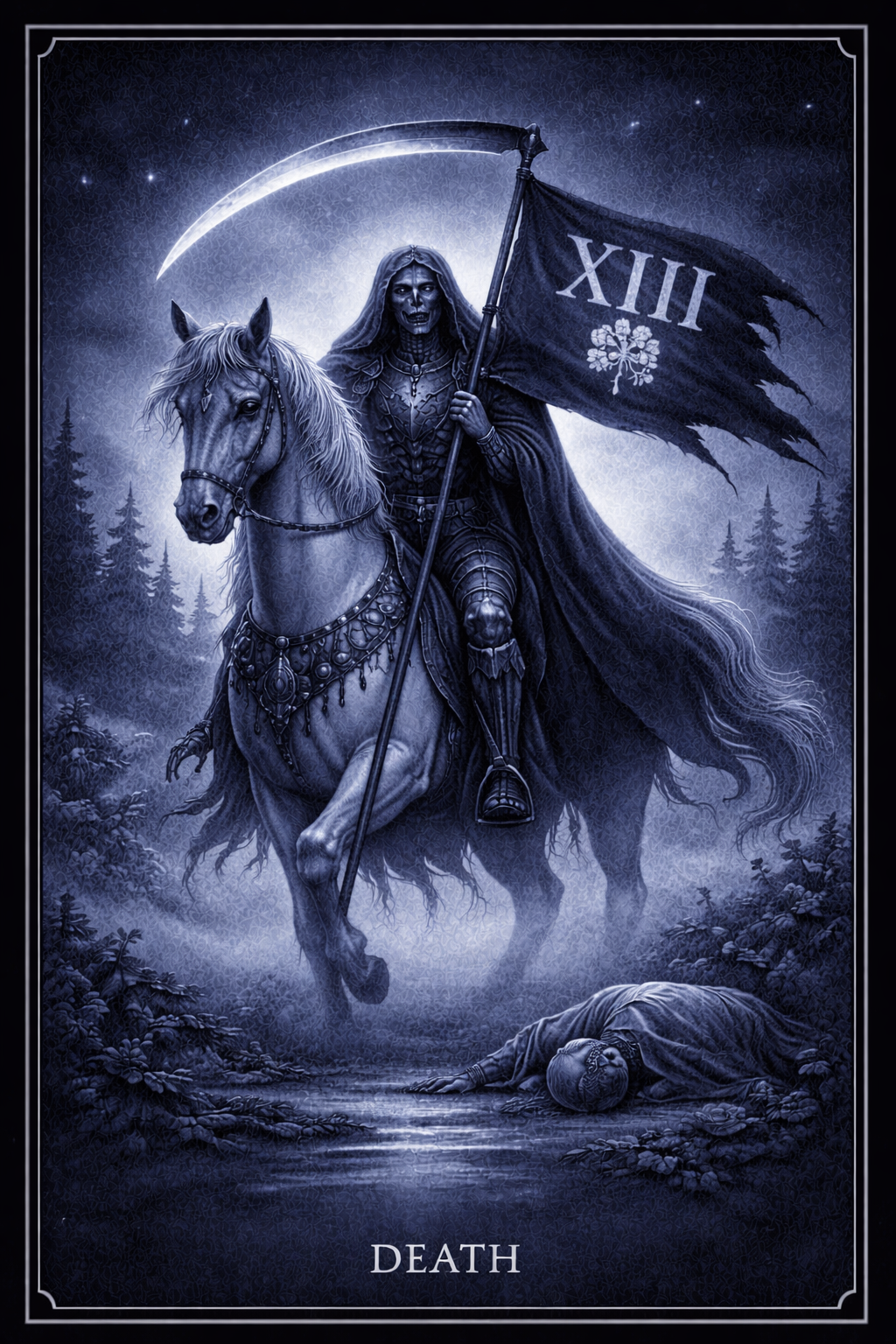
What Death means
Death almost never means physical death. What it actually means is that something in your life is already over, and the card is asking you to stop pretending it isn't. A relationship that's run its course. A version of yourself you've outgrown. A job, a friendship, a belief about who you are. The shape of your life is changing whether you want it to or not.
People pull Death at big thresholds. Turning 30 and realizing nothing fits anymore. A partner lying and the trust being gone even if the relationship technically continues. A friendship that quietly stopped being mutual. Death shows up when part of you already knows, and the rest of you is catching up. The hard part isn't the ending. The hard part is admitting it ended.
Upright & reversed
Upright Death is the clean break, or at least the one that needs to happen. Something is finishing. You might be the one ending it, or life might be ending it for you, but either way the door is closing. And that's the point. Death is the card that says: stop trying to revive this.
You might be feeling it as grief, relief, numbness, or all three at once. Someone who pulls Death after being lied to by a partner is often being shown that the version of the relationship they thought they had is already gone, and pretending otherwise will cost them more than the ending would. Someone turning 30 and feeling lost is being shown that the old life plan doesn't apply anymore, and mourning it is part of the process.
Death asks you to let something be over. That can mean a breakup, a career pivot, leaving a city, or just dropping an identity you've been carrying that no longer fits. The next thing can't arrive while you're still clutching the old one. Upright, the card is saying: it's time, and you probably already know.
Death is the card that says something is already over, and asks whether you're going to let it be. A Path & Direction reading maps your Position, Movement, Timing, and Stance, so you can see what's actually ending, what's ready to grow, and how to walk forward from here.Start a free reading
In your life
In love, upright Death is usually an ending, or the clear recognition that things have to change in a serious way. A relationship finishes. A dynamic that wasn't working breaks open. If your partner lied and you pulled this card, Death is saying the old version of the relationship, the one built on that trust, is gone. Whatever happens next has to be honest about that. For singles, Death often means closing the door on a pattern or an ex you keep half-returning to. You can't meet someone new while you're still emotionally married to the last one.
Reversed in love, you're hanging on past the point where hanging on makes sense. Maybe you're in a relationship that's been over emotionally for months and neither of you is saying it. Maybe you keep going back to someone who keeps showing you who they are. The feeling of 'will this ever go away' is often Death reversed: the grief can't complete because you won't let the thing actually end. The card is gentle here. It's not telling you to rip it apart today. It's asking you to stop pretending the ending isn't already happening.
Upright, Death leans no, but it's a specific kind of no. It's saying no to the thing continuing in its current form. Sometimes that no is exactly what clears the way for a better yes later, so context matters. If you're asking 'should I hold onto this,' the answer is usually no. If you're asking 'is it time to let go,' the answer is yes. Reversed, the answer is a stuck maybe: the situation is frozen, neither progressing nor resolving, because something needs to end and hasn't been allowed to yet.
Ask your own questionThe imagery
The skeleton in black armor riding a pale horse is the most famous image in tarot, and it's deliberately unsettling. The armor means this force can't be fought off. The horse moves steadily forward, not charging, just inevitable. In front of the rider, a king lies fallen, a child and a woman kneel, a bishop stands praying. Death takes everyone regardless of status. The black flag the rider carries shows a white five-petaled rose, a sign that what looks like an ending also carries life and beauty inside it. In the background, the sun rises between two towers, the same towers you see on The Moon, except here the light is coming, not fading. The river keeps flowing. Life continues on the other side of the ending.
Featured pairings
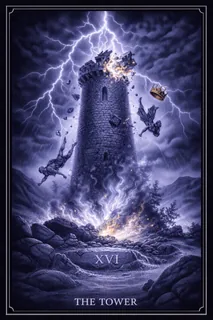
A forced, fast ending. Something collapses and you don't get to ease into it. Hard in the moment, but what comes out the other side is usually more honest than what was there before.
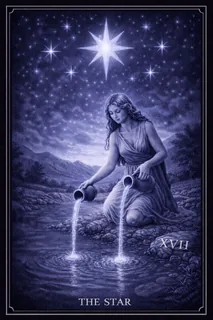
The ending and the healing in the same breath. Death clears the old thing, The Star is the quiet hope that comes after. A gentler version of grief, the kind that leaves you softer instead of harder.
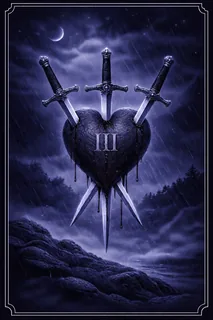
Heartbreak that's actually final. The sadness isn't a phase this time, it's the closing of a chapter. Painful, but honest. Better than pretending the wound isn't there.
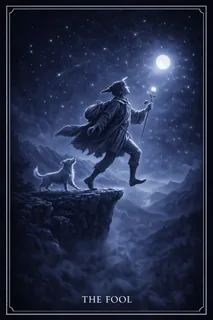
The ending directly next to the new beginning. One life closing and another one opening fast. Scary if you look at it as a gap, freeing if you look at it as a door.
Common questions
Does the Death card mean someone is going to die?
No. In almost every reading, Death is symbolic. It points at endings, transitions, and the closing of chapters in your life. Readers who have pulled this card for decades can tell you it basically never shows up as literal death. If you're worried about someone's health, that's a medical question, not a tarot one.
Why did I pull the Death card when nothing is ending?
Usually because something is ending and you haven't named it yet. A friendship that's been drifting. A job you've mentally checked out of. A version of yourself you've outgrown. Death often shows up slightly before you're ready to admit the shift. Sit with the card for a few days and notice what you've been avoiding looking at.
Is Death a good card or a bad card?
Neither, really. It's an honest card. Endings hurt, but they also clear space. If you're trying to leave a bad situation, Death is good news. If you're trying to keep something alive that's already over, Death is the nudge you didn't want but probably needed. The card itself isn't judging you either way.
What does Death mean in a love reading?
Usually that a relationship, or the current version of one, is ending or needs to. That can mean a breakup, or it can mean the dynamic has to fundamentally change. After a betrayal, Death often means the old trust is gone and can't simply be patched. For singles, it often means closing the door on an ex or a pattern before someone new can actually reach you.
How long does the Death card's energy last?
The ending itself can be quick, but the grieving and rebuilding usually take longer than you want. Expect weeks to months, not days. The card marks a real threshold in your life, not a passing mood. If you're asking 'will this feeling ever go away,' yes, but only once you let the ending actually complete instead of fighting it.
Questions in motion
Where Death has appeared in real readings.
Ready to pull your own?
Ask a real question. Get a free 3-card reading in plain human words. No account needed.
Start a free reading