Five of Swords
Five of Swords is the fight you won where nobody actually feels good about it, including you.
What Five of Swords means
Five of Swords shows up when a conflict has a winner on paper and a loss in the room. You got the last word, you proved the point, you held the line, and now the air feels thin. Something broke in the process and you can feel it.
This card isn't always about a big dramatic fight. Sometimes it's the tone you used with your sister, the way you shut down your partner to end the argument faster, the passive comment at work that landed harder than you meant. Five of Swords is the moment right after, when you're still holding the sword and wondering if it was worth it. It points at the cost of winning when winning wasn't actually what you needed.
Upright & reversed
Upright, Five of Swords is conflict with a receipt. Someone walked away defeated and someone walked away with the prize, and the card is asking you to look honestly at which one you are and whether the prize is real.
A few places this shows up. A family argument where you finally said the thing, and now the silence is worse than the tension was. A workplace situation where you got your way but burned a bridge you didn't know you needed. A relationship fight where you were technically right and it didn't matter, because being right didn't fix what was broken.
The card also points at situations where you're the one who lost and you're still replaying it. Someone steamrolled you, you didn't stand up for yourself, and the humiliation is sitting heavy. Five of Swords doesn't tell you to forgive and forget. It tells you to notice what the conflict actually cost, on both sides, before deciding what to do next. Winning isn't always the goal. Sometimes the goal is staying someone you can live with.
Five of Swords is conflict with a cost, the fight where winning and losing stopped being the point. A Connection reading maps what's actually happening between you: Field, Mirror, Tension, Possibility, so you can see the dynamic instead of just defending your side of it.Start a free reading
In your life
Upright in love, this is the argument that ended with one of you shutting down and the other feeling victorious in a way that doesn't sit right. Score-keeping, bringing up old wounds to win the current fight, or using someone's vulnerability against them. If you're single, it can point at a breakup where the ending was ugly and you're still carrying it. Five of Swords asks whether you want to be right with this person, or close to them. Those are sometimes different things, and pretending they aren't is how relationships erode.
Reversed in love, there's a thaw. An argument you thought was unfixable is softening, or one of you is finally willing to say the first thing. It can also mean you're still stuck replaying a conflict your partner already let go of, and the person keeping it alive is you. For people working through something with a toxic sibling, ex, or family member, reversed Five of Swords can signal the moment you stop trying to win the relationship and start choosing peace over proof.
Upright, Five of Swords leans no. Even if you get what you asked for, the cost is going to be higher than you want. It's a card of winning the battle and losing something bigger, so a yes here usually comes with regret attached. Reversed is closer to a maybe. The conflict is easing, the path is clearing, and the answer depends on whether you're ready to stop fighting for the outcome and let it unfold. If the question is about reconciliation or moving on, reversed leans yes.
Ask your own questionThe imagery
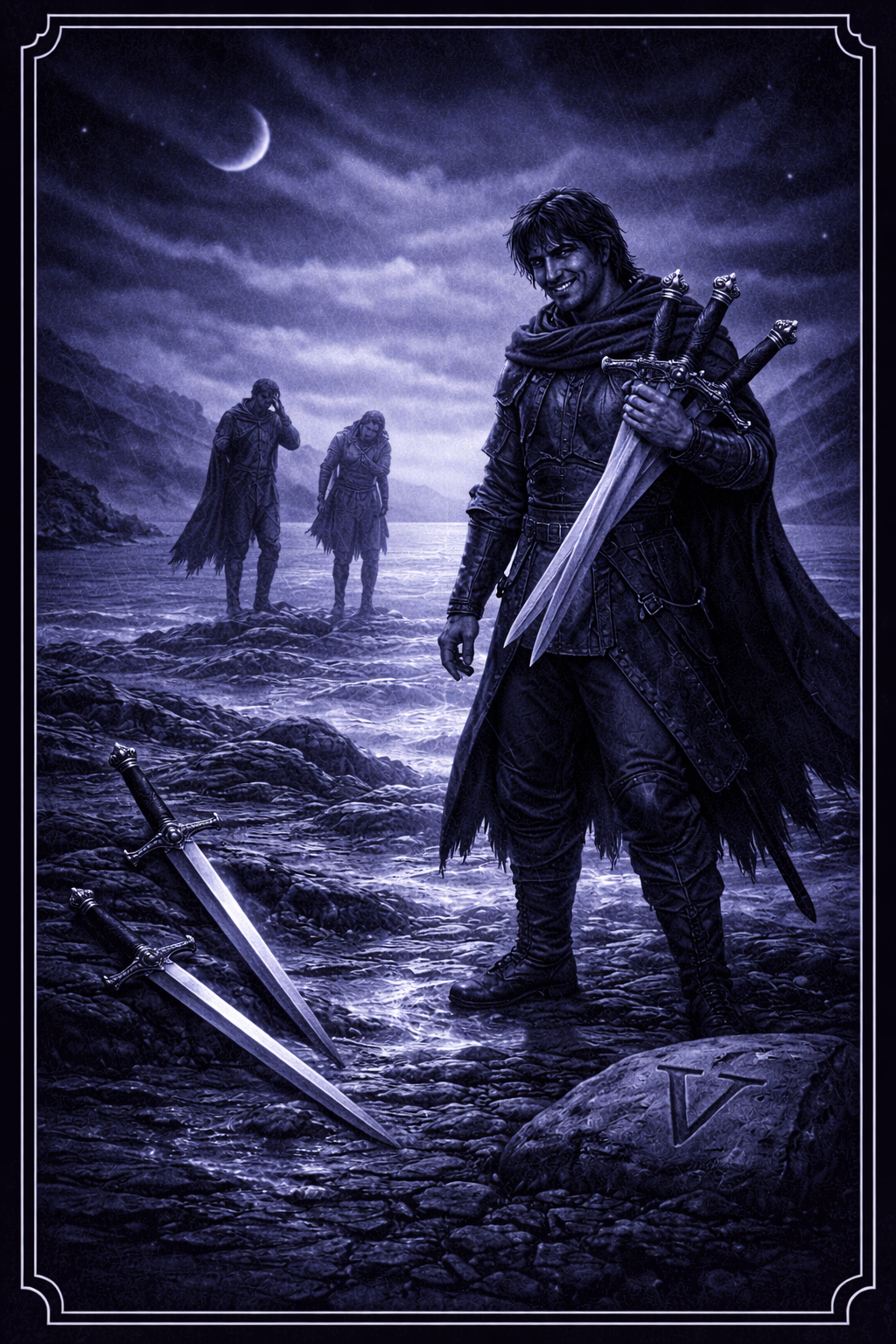
On the Rider-Waite-Smith card, a figure in the foreground holds three swords and looks back at two others walking away, heads down, one with a hand to their face. Two more swords lie on the ground behind him. The sky is streaked with jagged, broken clouds, and the water in the background is choppy. His expression is hard to read: a small smirk, maybe satisfaction, maybe something colder. The swords he holds aren't all his, he's collected what the others dropped. The walking figures have given up, not been defeated in any clean way. The broken sky mirrors a broken air between the figures, because Swords is the suit of thought and communication, and something in the communication has torn.
Featured pairings
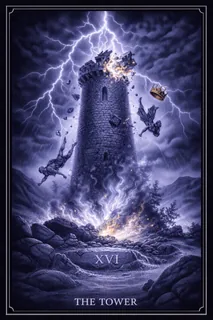
A conflict that doesn't just end a relationship, it detonates one. The fight exposes something that can't be un-seen, and the structure around it collapses.
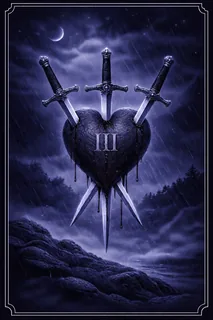
The hollow win on top of heartbreak. You got your point across and it hurt someone you love, and now you're both bleeding from the same wound.
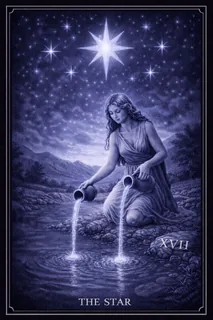
After the ugly fight, a slow return to yourself. The conflict happened, the damage is real, and healing is still available if you stop picking at it.
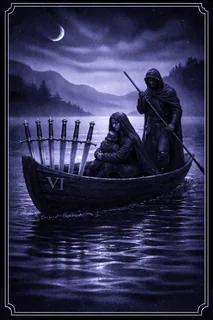
Leaving the conflict behind, literally. You stop trying to win and start trying to get somewhere calmer, even if it means going alone.
Common questions
Does Five of Swords mean I should cut someone off?
Not automatically. The card points at a relationship where winning and losing have taken over, but the answer depends on whether the dynamic can change or not. If you've tried everything and you're still the one bleeding, walking away is a real option. If you haven't actually said what needs saying, cutting off might just be another way of winning without resolving anything.
Why does Five of Swords keep showing up in my readings?
Usually because a conflict isn't finished, even if it looks finished on the outside. You may have moved on logistically but not emotionally, or there's a pattern of winning arguments at the cost of closeness that keeps repeating. The card shows up until you actually look at what the fight cost, not just who got the last word.
Is Five of Swords about me being the bully or being bullied?
It can be either, and sometimes both in the same situation. Look at the figures on the card: the smirking one holding the swords, and the two walking away defeated. Ask honestly which one you are in the situation you're reading about. Sometimes you've been both inside the same relationship at different moments.
Can Five of Swords mean reconciliation?
Reversed, yes. The upright card is the middle of the conflict or right after, when everyone's still sore. Reversed points at exhaustion on both sides, a willingness to lay the weapons down, and a real chance at repair. It's not a guaranteed happy ending, but it's the door opening instead of slamming.
What does Five of Swords say about starting over?
It often shows up when someone's starting over after a conflict that broke something, a marriage, a job, a family tie. The card acknowledges the loss is real and doesn't pretend the fight didn't cost you. Starting over from Five of Swords means leaving the battlefield without needing to win it first, which is harder than it sounds but worth it.
Questions in motion
Where Five of Swords has appeared in real readings.
Ready to pull your own?
Ask a real question. Get a free 3-card reading in plain human words. No account needed.
Start a free reading